
Introduction
GRP Grating—an increasingly preferred material in industrial, commercial, and marine environments—has grown in popularity due to its durability, corrosion resistance, and lightweight structure. As industries demand safer, more adaptable, and longer-lasting flooring and support systems, GRP Grating has emerged as a superior alternative to traditional steel and aluminum grating. This article explores everything you need to know about GRP grating panels, including standard sizes, specifications, manufacturing options, and the benefits of custom fabrication. Whether you are an engineer, project manager, or procurement specialist, understanding these factors will help you choose the right GRP Grating solutions for your specific application.
What Is GRP Grating?
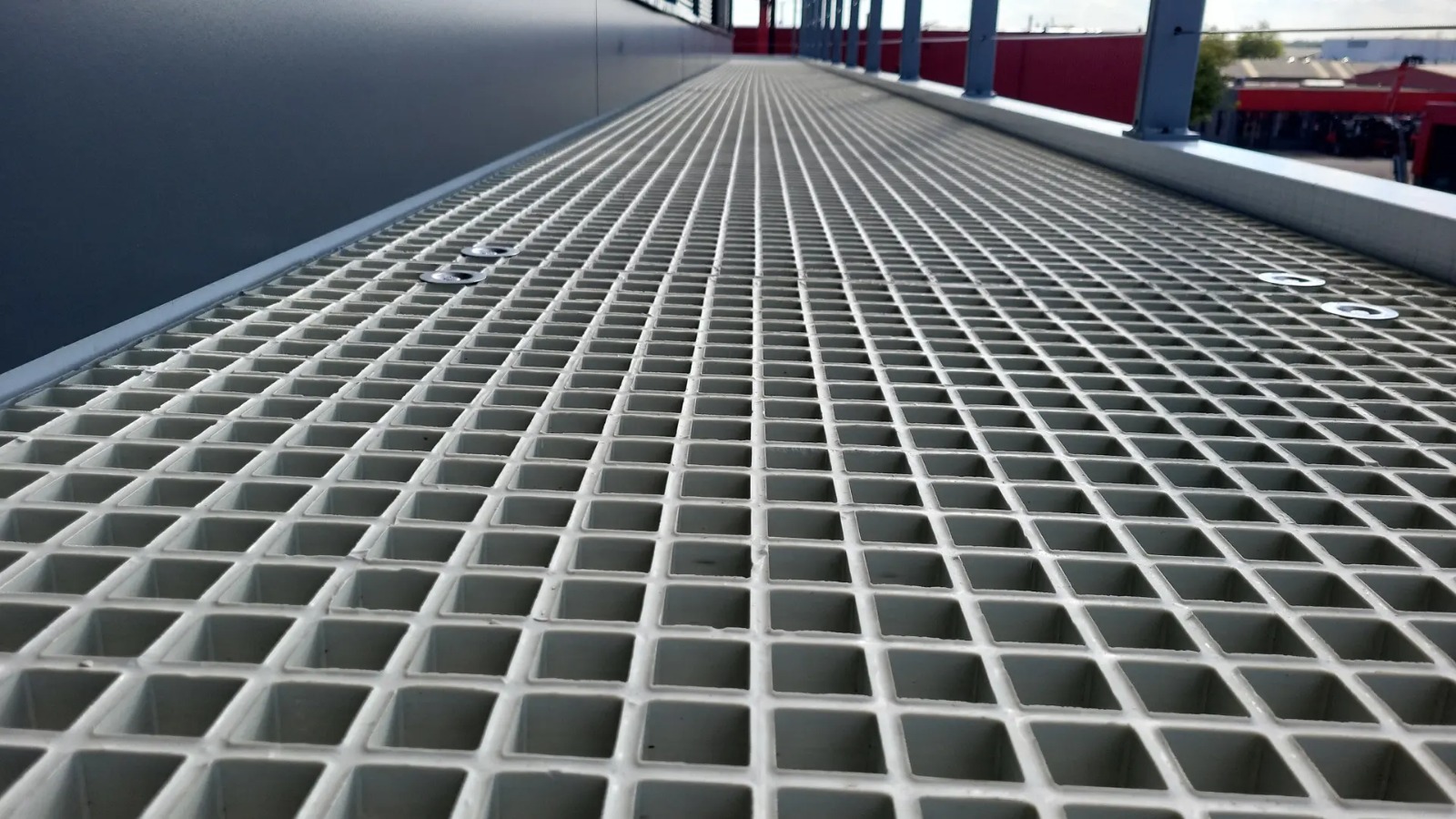
Glass Reinforced Plastic (GRP) Grating is a composite material made from resin and glass fiber, molded or pultruded to form a robust panel used for flooring, walkways, platforms, and structural applications. The core strength of GRP Grating lies in its glass fiber reinforcement, which offers exceptional strength-to-weight ratios and resistance to harsh environmental conditions.
Key Features of GRP Grating
- Corrosion Resistance: Ideal for chemical plants, wastewater facilities, and coastal environments.
- High Strength: Equivalent load-bearing capacity compared to steel but much lighter.
- Slip Resistance: Designed with anti-slip surfaces to improve workplace safety.
- Electrical Insulation: An excellent alternative in environments where electrical conductivity is a concern.
- Low Maintenance: Requires minimal upkeep compared to metal solutions.
Because of these advantages, GRP Grating is widely used in industries such as petrochemicals, marine, power generation, mining, and construction.
Types of GRP Grating Panels
Different applications require different types of grating, and GRP solutions come in two primary forms:
Molded GRP Grating
Molded GRP Grating is formed by placing glass fibers in a mold and saturating them with resin. The material cures into a single-piece panel with uniform strength in both directions.
Advantages of Molded GRP Grating:
- Uniform load distribution
- High chemical resistance
- Better for cutouts and penetrations
- Excellent slip resistance
This type of GRP Grating is perfect for walkways, platforms, trenches, and applications where corrosion is a primary concern.
Pultruded GRP Grating
Pultruded GRP Grating is manufactured through a continuous pulling process where fibers are saturated with resin and pulled through a heated die, forming profiles that are then assembled into grating panels.
Advantages of Pultruded Grating:
- Higher load capacity in one direction
- Long span capability
- Ideal for heavy-duty industrial applications
Both types of GRP Grating offer long service life and adaptability, making them suitable for diverse projects.
Standard Sizes of GRP Grating Panels
Panel Dimensions
While custom sizes are available, GRP Grating panels are commonly supplied in standard sizes to fit typical industrial layouts:
- 1000 mm × 4000 mm
- 1220 mm × 3660 mm
- 1500 mm × 4000 mm
- 2000 mm × 3000 mm
Standard thickness options include:
- 25 mm (most common for general industrial flooring)
- 30 mm
- 38 mm (for heavy-duty applications)
These sizes help streamline installation and reduce wastage, though custom dimensions can be produced depending on project requirements.
Mesh Patterns
GRP Grating mesh patterns influence load capacity, drainage, and slip resistance. Common patterns include:
- 38 × 38 mm mesh — standard industrial mesh
- 50 × 50 mm mesh — for lighter applications
- 25 × 25 mm mini mesh — for public spaces or areas requiring smaller openings
Choosing the right mesh pattern ensures that your GRP Grating performs optimally in your environment.
GRP Grating Specifications
Resin Types
Different resin compositions are used to enhance specific features:
- Isophthalic Resin: Excellent corrosion resistance; ideal for industrial applications.
- Vinyl Ester Resin: Superior chemical resistance; used in highly corrosive environments such as chemical manufacturing.
- Orthophthalic Resin: Cost-effective; suitable for general environments.
Choosing the correct resin type greatly affects the performance and longevity of your GRP Grating system.
Surface Finishes
Surface texture enhances safety and usability:
- Concave Surface: Standard anti-slip finish
- Gritted Surface: Maximum slip resistance for oily or wet environments
- Smooth Finish: Used when easy cleaning is a priority
Load Ratings
GRP Grating panels are tested and classified according to their load-bearing capacity. Typical load ratings depend on:
- Panel thickness
- Mesh pattern
- Fiber content
- Resin type
Heavy-duty GRP Grating can support machinery, vehicles, and industrial equipment.
Applications of GRP Grating
Industrial Applications
- Chemical processing facilities
- Oil and gas platforms
- Power plants
- Wastewater treatment plants
These industries rely on GRP Grating due to its resistance to corrosion and mechanical stress.
Commercial and Public Use
- Pedestrian walkways
- Bridges and ramps
- Drainage covers
- Poolside areas
GRP Grating’s slip-resistant features make it ideal for environments where safety is a priority.
Marine and Offshore Applications
- Ship decks
- Docks and piers
- Offshore rigs
Its saltwater resistance ensures long-term performance in marine environments.
Benefits of GRP Grating Over Steel Grating
Corrosion Resistance
Unlike steel, GRP Grating does not rust or corrode, even when exposed to chemicals, moisture, or saltwater. This results in significantly lower maintenance costs and longer service life.
Lightweight yet Strong
GRP Grating panels weigh up to 60% less than steel equivalents while maintaining impressive strength. This reduces transportation, handling, and installation costs.
Improved Safety
Features such as slip resistance and electrical insulation make GRP Grating a safer choice for workers in hazardous environments.
Cost-Effective Over the Long Term
While the initial cost of GRP Grating may be higher than steel, its low maintenance requirements and long lifespan provide significant cost savings over time.
Custom Fabrication of GRP Grating Panels
Sometimes standard sizes don’t fit project needs, and that’s when custom fabrication becomes essential. GRP Grating can be tailored to meet complex design requirements, ensuring seamless integration into any structure.
Cutting and Shaping
GRP Grating can be cut using standard workshop tools, allowing fabricators to create:
- Curved shapes
- Cutouts for pipes or cable trays
- Notched edges
- Stair treads
This makes GRP Grating easier to adapt compared to metal grating, which requires heavy-duty cutting equipment.
Custom Panel Sizes
Fabricators can create custom panel lengths and widths designed to fit specific structural layouts, eliminating on-site waste and reducing installation time.
Color Options
GRP Grating is available in various colors, often used for safety zoning or aesthetic purposes:
- Yellow
- Grey
- Green
- Red
Color customization enhances visibility and improves workplace safety.
Custom Load Requirements
When a project requires unusually high load capacity, GRP Grating can be manufactured with thicker walls, higher fiber content, or specialized resins.
Installation Considerations
Proper installation ensures the performance and longevity of your GRP Grating system.
Fastening Systems
Clips and clamps ensure panels remain secure. Fastening types include:
- M-Clips
- C-Clips
- L-Clips
Each fastening option works with specific panel types, ensuring proper stability.
Support Structures
GRP Grating must be installed on adequate support framing. Steel, GRP, or concrete beams are commonly used.
Thermal Expansion
GRP materials expand slightly more than steel, so installation should account for expansion gaps.
Maintenance Tips
Even though GRP Grating is low-maintenance, periodic cleaning and inspection ensure long-term performance.
Why Choose GRP Grating for Your Next Project?
Choosing GRP Grating offers numerous long-term benefits:
- Reduced maintenance costs
- Greater safety in hazardous environments
- Versatile use across industries
- Customizable to any design or load requirement
- Resistant to corrosion, chemicals, and weather
These qualities make GRP Grating one of the most reliable and adaptable materials available today.
Conclusion
GRP Grating stands out as a versatile, durable, and cost-effective solution for industrial, commercial, and marine applications. With its exceptional corrosion resistance, high strength-to-weight ratio, and long-term reliability, GRP Grating provides a superior alternative to traditional steel grating. By understanding panel sizes, specifications, resin types, and the benefits of custom fabrication, you can confidently choose the right solution for your project. Whether you need standard panels or fully customized designs, GRP Grating delivers optimal performance, safety, and longevity for countless applications.