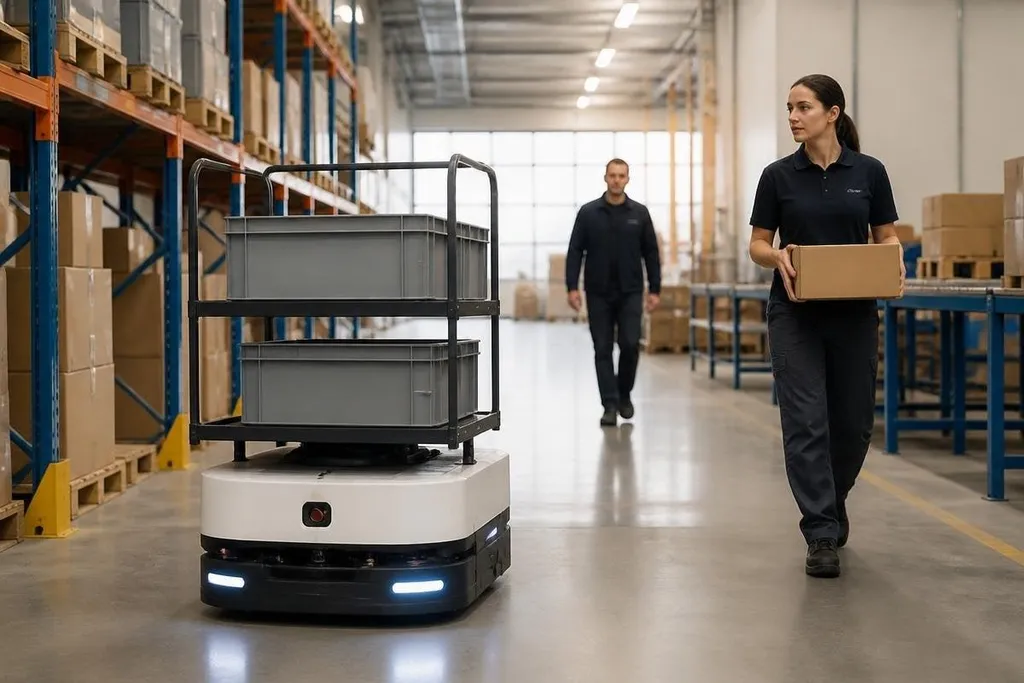
Mobile robots will be judged less by how smoothly they move and more by how well they handle real work. A machine that carries goods, checks equipment, or moves through a hospital must deal with people, changing routes, low batteries, and tasks that weren't planned in advance.
Quick read:
- Mobility is only the starting point; the robot must complete a useful task.
- Sensors, software updates, charging, and human handoffs shape the real cost.
- Buyers should ask for proof from the place where the robot will run.
Movement is only the first test
A mobile robot needs wheels, legs, or tracks to reach a location. That part is visible, so it often gets most of the attention. The harder test begins after the robot arrives.
A warehouse robot may need to find the correct shelf, stop at a safe distance, wait for a worker, and confirm that the item has moved. An inspection robot may need to return to the same asset, record a clear image, and flag a change for a person to check.
That work depends on navigation. Simultaneous localization and mapping, or SLAM, lets a robot build a map while estimating its position on that map. The system still needs help from cameras, LiDAR, wheel sensors, or other tools when people move objects or block a route.
The useful question is not whether a robot can cross a room. Ask how it behaves when the room changes.
The robot has to fit the work
A robot designed for a factory floor may struggle in a hospital corridor. Floor surfaces, door widths, lifts, lighting, noise, and foot traffic all affect its work.
A model that performs well in one site can need new maps, safety rules, and software before it runs elsewhere. The handoff between the robot and people also matters.
A worker needs to know what the robot wants, what it has completed, and what caused it to stop. A clear screen or light can help, but the message must match the task. “Obstacle detected” leaves a worker with more work than “cart blocking aisle 4.”
A route change can turn a short mobile-robot trial into a manual job, so the report should name the site, task, stop reason, and time to resume. Mobile robot reports from Robot24.com can tie those details to the machine and company involved. That record leads to the next test: how the robot recovers when the route or load changes.
These robots will also need better recovery. If a route closes, the robot should find another safe route or ask for help. If a load shifts, it should stop in a known safe state instead of repeating the same failed move.
Software and service shape the cost
A mobile robot is a physical product with a software life. Maps change, sensors need checks, and operating systems can affect fleet control. Buyers should ask who handles updates, how faults are logged, and what happens when the network connection fails.
Charging creates another limit. A robot that spends part of its work period at a charger may still fit a slow transport job, but it may not fit a task that needs steady movement. Battery swaps, spare units, and charging points all add equipment and floor space.
The purchase price also leaves out several costs. Site preparation, network work, staff training, safety reviews, maintenance, and integration with warehouse or hospital software can change the total bill. I'd wait for a supplier to show the full operating plan before judging the machine from a demo.
A practical buying checklist
Use these questions before a pilot or purchase:
- Name the task: Write the exact job, handoff, load, route, and success measure.
- Test the site: Run the robot on the real floor with normal people, lighting, doors, and traffic.
- Measure recovery: Record how often it stops, how long help takes, and what workers must do.
- Check the service plan: Ask about spare parts, software updates, remote support, and repair times.
- Price the full setup: Include charging, network changes, training, safety work, and integration.
- Set a stop rule: Decide which failure rate or delay ends the pilot.
That last point protects the buyer from extending a weak trial because time and money have already been spent. A pilot should answer a business question, not become a permanent demonstration area.
Mobile robots are moving toward harder jobs, but movement alone won't prove they are ready. The next useful test is specific: can the robot complete one real task, recover from normal problems, and show a cost that makes sense after the people and site work are counted?